

Waking in the Night
Another Interlude.. .

It was in late March, during a few strangely beautiful days in Palm Springs, that I last published here on Extracts. At the time, I fully intended to return quickly to Claude’s 1941–42 journals and the vivid new world he was discovering as a first-year student at Harvard. Instead, April disappeared into Vermont springtime — work, mud season, long days, reclaiming the garden, ordinary life — and now suddenly most of May seems to have vanished too.
Those Harvard journals are still beside the bed, and I promise I’ll get back to them very soon. But lately I’ve found myself thinking about the night.
For newer readers: I began Extracts in 2025 as a way of sharing selections from the vast journals of my late husband Claude Fredericks — poet, teacher, printer — whose 65,000-page journal archive is now preserved at the Getty Research Institute. Over time, the project has also become something more personal and reflective for me as well.
I recently came across the old historical idea that, before industrialization and electric light, people in parts of Europe often slept in two distinct shifts: a ‘first sleep’ and a ‘second sleep.’ Between them came a quiet waking period, sometimes lasting an hour or two. People prayed. Read. Tended fires. Spoke quietly with one another. Sometimes they even walked beneath the moon. I love the idea that the night once had a middle chapter.
And I’ve started to recognize something of that feeling in myself lately. Not every night, certainly. Sometimes waking in the dark still arrives with tension or even terror attached to it — tomorrow’s obligations already lining themselves up in my mind before I’m even fully awake. But other nights feel completely different. I wake very quietly and feel oddly calm there in the dark. The whole house feels still. Beside me, Edward is breathing quietly, asleep. Sometimes moonlight is falling across the opposite wall. And for a few moments I feel no urgency at all.
There is plenty in life at the moment that could justify anxiety: work pressures, financial uncertainty, the strange feeling of trying to keep too many things going at once, and beyond all that, a world that often feels filled with uncertainty and dread. Yet despite it all, I’ve occasionally been waking with a real sense of ease. My body feels settled. My mind loosens a little. I don’t feel compelled to solve anything right then. Sometimes I simply lie there breathing quietly.
On the inhale: Just this breath.
On the exhale: Just this moment.
Rilke once wrote, ‘The night is not beneath us’. I’ve been thinking about that line too. I’ve always loved the suggestion that the mind awake at night may understand certain things differently.
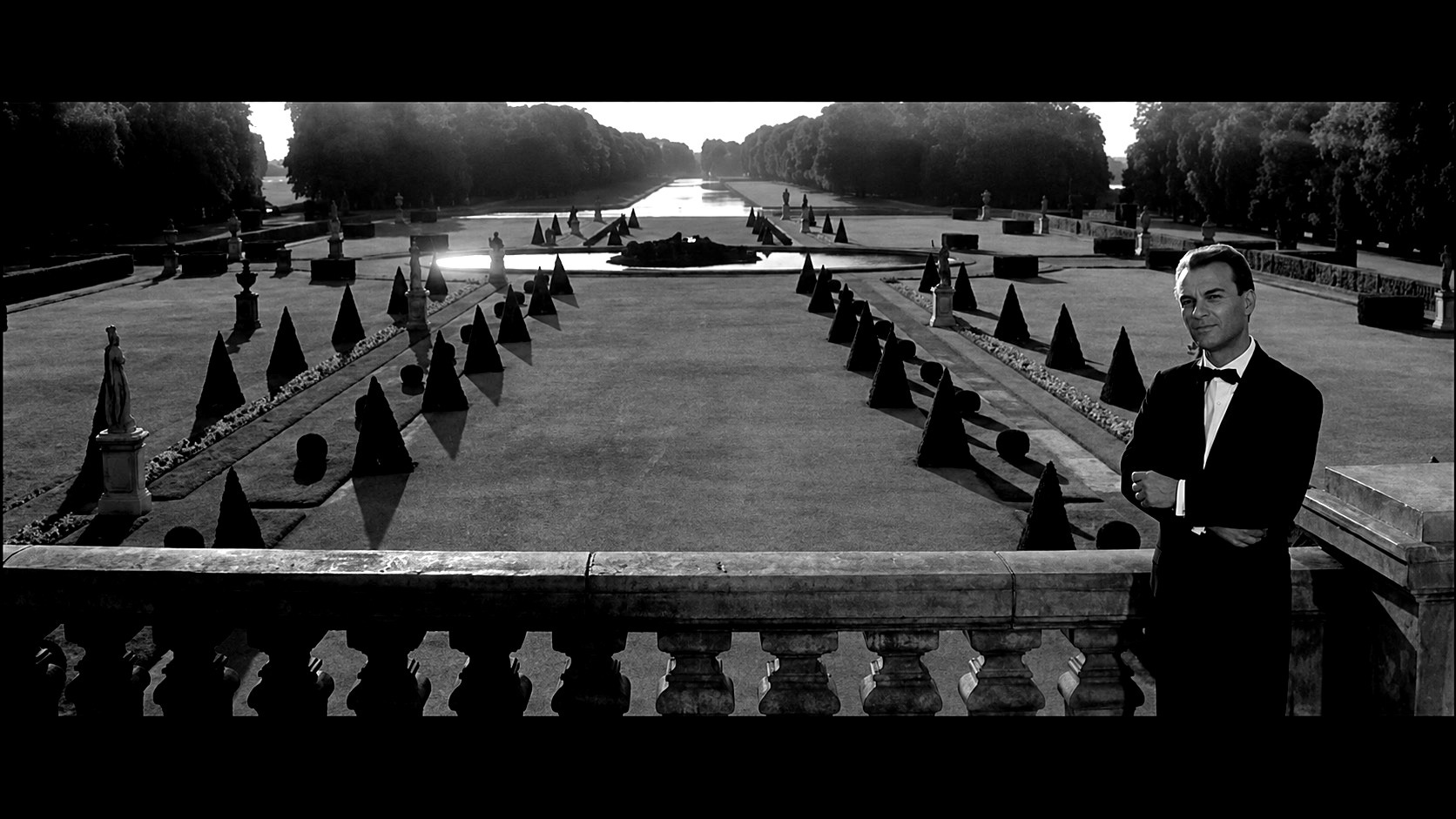
Years ago, Claude and I watched Alain Resnais’s Last Year at Marienbad (1961), with its strange drifting atmosphere where memory and desire never quite settle into certainty. But what I think about most now are the moonlit gardens and those nighttime walks through formal landscapes while the rest of the world slept.
And perhaps that’s why, this spring, reclaiming my own garden again after mostly neglecting it last year, I’ve found myself unexpectedly thinking about Europe, pea gravel paths, moonlight, and memory.
For those who’d like to continue reading, the piece continues below.

Copyright Notice: All journal entries and photographs are © Marc Harrington. No portion of these materials—whether photographs, full journal entries, excerpts, or extracts—may be used or reproduced in any form without written permission. With gratitude to the Getty Research Institute for preserving the original manuscripts.
